
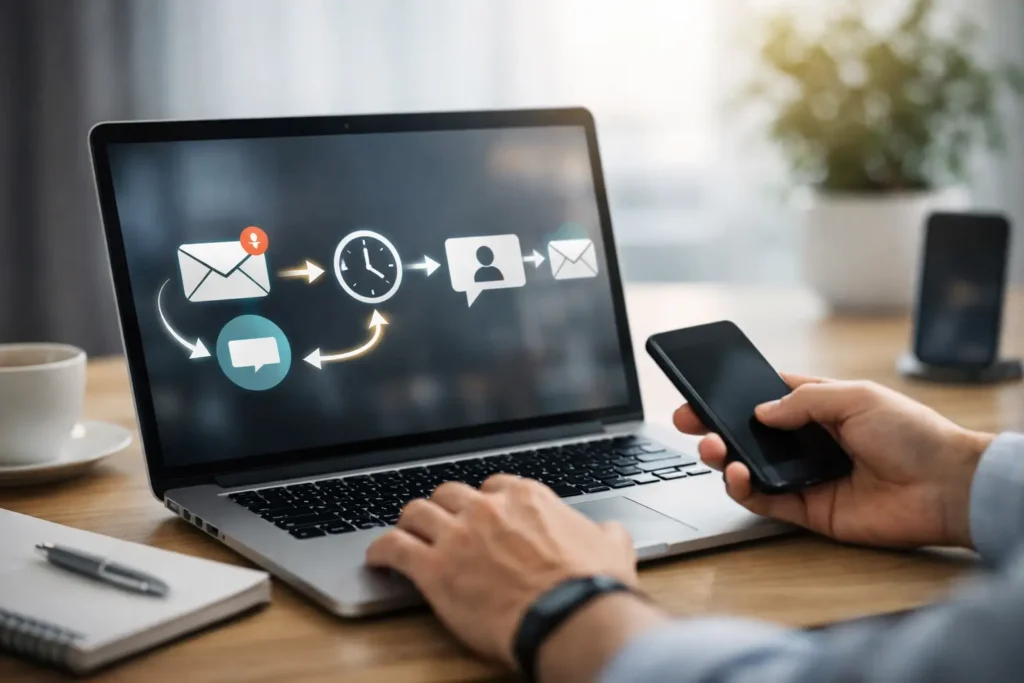
Most people do not lose a prospect because the opportunity was wrong. They lose them because the conversation stopped too soon. Learning how to create automated follow up means your interested leads do not disappear the moment life gets busy, you hesitate to message them, or you run out of time.
That matters if you are building a home-based income. You may have a powerful subscription opportunity, a clear plan and genuine support available, but none of it helps if prospects watch one video, say “I’ll have a look later”, then drift away. Automated follow up gives people the time and information they need to make a decision without you chasing friends, family or strangers all day.
The goal is not to bombard people with messages. The goal is to stay visible, build belief and guide the right people towards the next simple step.
Why most follow up fails before it starts
Old-school network marketing taught people to make a list, send awkward messages and repeatedly ask whether someone had “had a chance to look”. It is uncomfortable for you and usually irritating for the prospect. Worse, it is impossible to sustain when you are already balancing a job, family and the reason you started looking for extra income in the first place.
The real problem is rarely a lack of leads. It is a lack of a consistent system for what happens after a lead arrives.
A prospect may be curious but sceptical. They may need to understand the compensation structure, see how the subscription model works, consider the cost, or simply wait until payday. If every follow-up message depends on your memory and motivation, valuable conversations will fall through the cracks.
Automation handles consistency. You still bring honesty, judgement and human conversation when it counts.
Start with one clear next step
Before setting up a single email or message, decide exactly what you want a new prospect to do. Trying to make them watch a presentation, join a programme, book a call and share it with others all at once creates confusion.
For most opportunity funnels, the first next step is simple: watch a short video that explains the model. The second may be to request details, attend a presentation or pre-enrol. Each step should feel logical, low pressure and easy to complete on a mobile phone.
Your automation should not begin with a hard sell. It should begin where the prospect is. Someone who has just requested information needs clarity. Someone who watched a presentation but did not act needs answers to the doubts that naturally appear afterwards. Someone who has already enrolled needs onboarding support, not more recruitment messages.
This is why a single generic sequence sent to everyone often underperforms. Segment people according to what they did, not just the day they joined your list.
How to create automated follow up in five stages
The best systems are not complicated. They give each message one job and move people forward without sounding like a machine.
1. Deliver what they asked for immediately
The first message should arrive within minutes of an opt-in or enquiry. Thank them, remind them what they requested and point them to the promised video or information. Do not bury the action under a long life story or five separate offers.
Keep the tone conversational. A prospect should feel that a real person understands why they are looking. Many have already spent money on courses, adverts or opportunities that promised the earth and delivered very little. Acknowledge that frustration without attacking every other business model.
A strong opening could focus on the reality: you do not need to pressure your personal contacts to explore a subscription-led opportunity, but you do need to understand the system before deciding whether it suits you.
2. Build belief before asking for commitment
Your next few follow-ups should answer the questions people are already thinking but may not ask directly. Is this another expensive scheme? Do I have to hold stock? Must I become a social media personality? What happens if I do not know loads of people? Can I do this alongside work?
Use short emails, video messages or automated chat prompts to tackle one concern at a time. Explain the value of recurring subscription economics in plain English. Explain that results depend on activity, skill, timing and the effort someone is prepared to put in. Credibility rises when you do not pretend every person will get identical outcomes.
This is also the right moment to show the bigger picture. The attraction is not just a one-off commission. It is the possibility of building recurring income from a customer and member base over time, with a system that can continue working when you are not manually sending messages.
3. Use behaviour to decide the next message
This is where automation becomes more than a scheduled string of emails. If someone watches the main video, they should receive a different follow up from someone who never opens the first message. If they visit the enrolment page but do not complete registration, they likely need reassurance or a direct invitation to ask a question.
Set up practical triggers such as these:
- A new lead receives the welcome message and introductory video.
- A video viewer receives answers to common objections the following day.
- A prospect who clicks through to enrol receives a reminder with clear support options.
- An enrollee receives a welcome sequence explaining their first actions.
Do not over-engineer this at the beginning. Three or four meaningful actions are enough to create a far better experience than sending everybody the same daily message for a month.
4. Mix automation with real human contact
Automation creates the opening. It does not replace your judgement.
When someone replies, asks a specific question, repeatedly watches your content or clicks through more than once, that is your cue to step in personally. Reply like a person, not like a closer reading from a script. Ask what caught their attention and what is holding them back. Then listen.
Some people will want to start immediately. Others may be interested but not ready. Pressuring either group damages trust. Your automated system can continue providing useful information while you focus your personal time on people who are actively engaging.
At Vitality Maestros, the principle is simple: use the system to create consistent exposure, then use genuine support to help serious people make an informed move.
5. Know when to stop pushing
A good sequence has an end. If someone has not opened or clicked anything after several useful messages, do not keep filling their inbox indefinitely. Send a final check-in that gives them a choice: continue receiving guidance, pause for now, or remove themselves from the list.
This protects your sender reputation and respects the prospect. It also keeps your attention on the people who are ready to learn, watch and act.
What your follow-up messages should actually say
Every message needs a purpose. One may invite them to watch a short overview. The next might explain why relying on friends and family is not a serious long-term lead strategy. Another could show how a simple funnel helps you collect enquiries while you are at work, asleep or spending time with your family.
Avoid vague hype such as “This will change your life” with no explanation. Specificity converts better. Tell prospects what they will learn in the next video, what the programme costs if that is relevant, and what support is available once they join.
Keep most messages short. One idea, one call to action, one reason to take it. A useful rhythm is immediate delivery, a value-based message the next day, an objection-handling message after that, then a direct invitation to watch the full presentation or take the next step.
Timing depends on your audience. For a warm lead who requested details, daily contact for the first few days can be reasonable. For colder traffic, spacing messages further apart may feel more natural. Watch the open rates, clicks, replies and enrolments rather than copying someone else’s schedule blindly.
Measure the gaps, not just the sign-ups
It is tempting to judge an automated follow up system only by enrolments. Sign-ups matter, but they do not tell you where the system is leaking.
If people opt in but do not watch the first video, your first message or subject line may be weak. If they watch but do not click through, the presentation may not answer a key question. If they begin enrolling but stop, the form, price point or perceived risk may need attention.
Review one stage at a time. Change the headline, message angle or call to action, then give it enough traffic to see whether the improvement is real. Changing everything at once leaves you guessing.
The biggest advantage is not that automated follow up lets you avoid people. It is that it frees you to have better conversations with the people who genuinely want a different financial future. Set up the first simple sequence, test it with real leads, and let consistency do the work that motivation never can.